Medicine and Health
What technologies can we use to make faster and more reliable medical diagnoses? How will we treat diseases like cancer, Crohn's disease, multiple sclerosis, obesity, diabetes or Alzheimer's disease in the future?
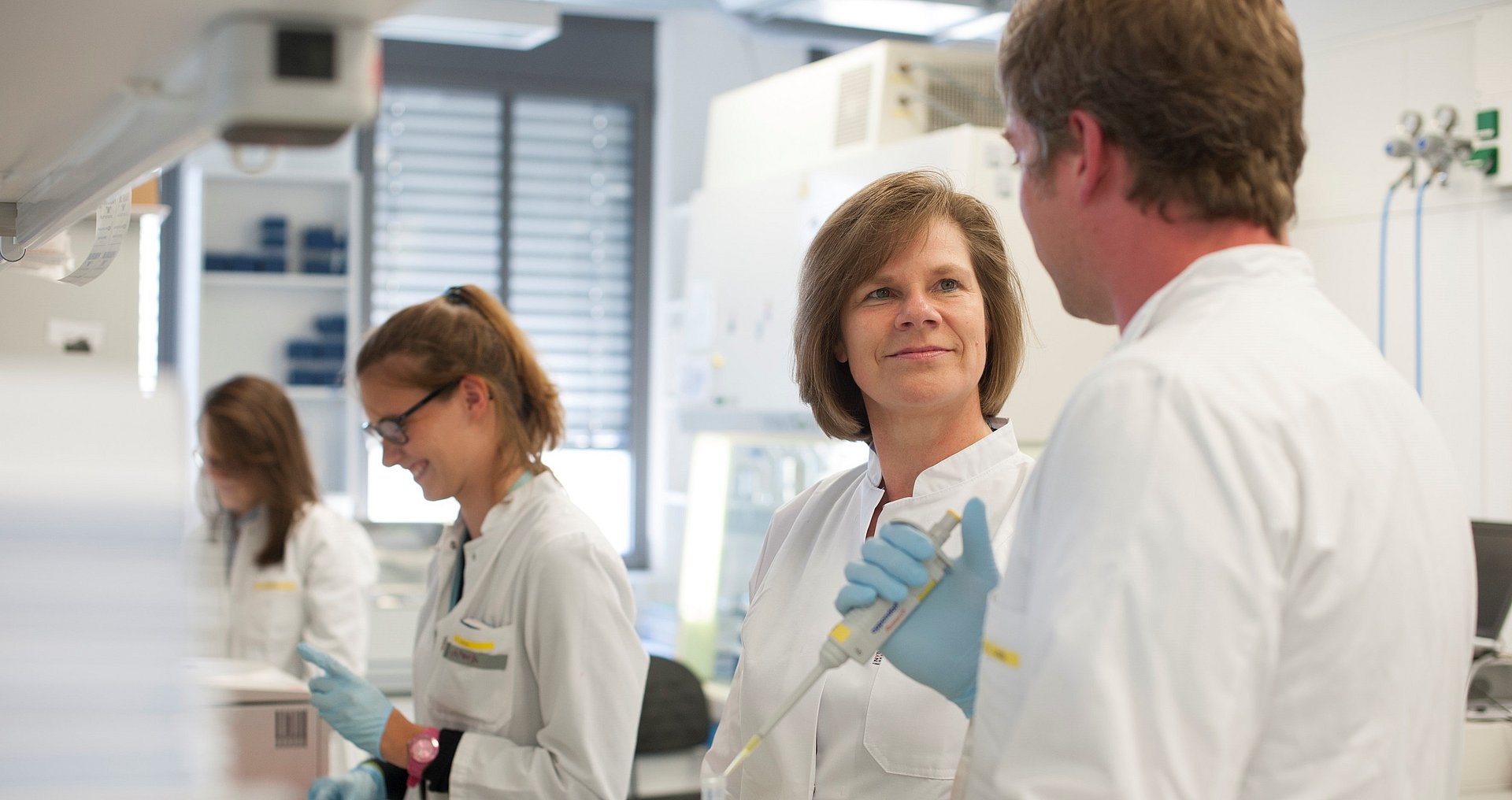
What role do nutrition and the gut microbiome play in these metabolic and immune diseases? How do we protect ourselves from viruses and how do we fight them? In our efforts to answer these questions, we link the study of medicine with the natural sciences, life sciences, engineering and informatics. This generates enormous potential in the fields of biomedical engineering and digital medicine, enabling us to meet the needs of a modern healthcare system with preventive strategies and the latest technological resources.
We develop new imaging technologies to gain more detailed insights into the human body and investigate new approaches for personalized diagnoses and therapies. The findings we produce are incorporated into the training of doctors and the treatment of patients. Our work therefore has a direct, practical impact and makes an essential contribution to health care system.
- The TUM University Hospital has united the TUM University Hospital Klinikum Rechts der Isar and the TUM University Hospital German Heart Center under one roof since August 2024.
- Kinderklinik München Schwabing children’s hospital (together with the München Kliniken hospital group)
- TUM School of Medicine and Health
- Institute for Advanced Study (IAS)
- Munich Institute of Biomedical Engineering (MIBE)
- TranslaTUM - Central Institute for Translational Cancer Research
- ZIEL - Institute for Food & Health
- Center for Digital Medicine and Health (ZDMG), under development
- Center for Infection Prevention (ZIP)
- Research Center for Multiple Sclerosis, under development
- TUM Center for Organoid Systems (COS) (opening planned for 2025)
- TUM Center for Structural and Functional Connectomics – CSFC (under development)
- Center for Smart Drug Design
- Comprehensive Cancer Center München (CCCM) (German)
- „M1 – Munich Medicine Alliance“ as part of the „Highmed Agenda Bayern“
You will find a selection of important current research projects here:
- Cluster of Excellence „NUCLEATE“
- Cluster of Excellence „SyNergy“
- CRC 1371: Microbiome Signatures - Functional Relevance in the Digestive Tract
- TRR 267: Non-coding RNA in the cardiovascular system
- TRR 338: LETSIMMUN - Lymphocyte Engineering for Therapeutic Synthetic Immunity
- TRR 387: Functionalizing the Ubiqutin-system against cancer – UbiQancer
-
RTG 2668: Immune Master Switches in Allergies and Autoimmune Diseases
- BMFTR Clusters4Future „CNAMT“ (in German only)
- TUM Innovation Network „Neurotech“
- TUM Innovation Network „NextGenDrugs“
- TUM Innovation Network „eXprt“
EU funding: ERC Grants, EU Projects, EITs
- ADRIP, ERC Starting Grant, Dr. med. Sonja Wörmann
- AI-PIONEER, ERC Starting Grant, PD Dr. Jan Peeken
- CITE, ERC Starting Grant, Prof. Dr. Nicole Strittmatter
- EcIMPACT, ERC Starting Grant, Prof. Dr. Michael Laxy
- EscapeX, ERC Starting Grant, Dr. Daniel Andergassen
- HEROINE, ERC Starting Grant, Dr. Melanie Schirmer
- MATRICARD, ERC Starting Grant, PD Dr.med. Thorsten Kessler (DHM)
- MONSil-AD, ERC Starting Grant, Dr. Benedikt Zott
-
NTasePro, ERC Starting Grant, Prof. Dr. Carina Baer de Oliveira Mann
- PicoBody, ERC Starting Grant, Prof. Dr. Hristo Svilenov
- uStemGel, ERC Starting Grant, Prof. Dr. Berna Özkale Edelmann
-
EvoGutHealth, ERC Consolidator Grant, Prof. Dr. Barbara Stecher-Letsch
- GRACE, ERC Consolidator Grant, Prof. Dr. Nina H. Uhlenhaut
- iBAck-epic, ERC Consolidator Grant, Prof. Dr. med. Jan Kirschke
- LongTx, ERC Consolidator Grant, Prof. Dr. Lars Mägdefessel
- breakingBAC, ERC Advanced Grant, Prof. Dr. Stephan A. Sieber
- BREATHE, ERC Advanced Grant, Prof. Dr. Wolfgang Wall
- Cor-Edit-P, ERC Advanced Grant, Prof. Christian Kupatt-Jeremias
- EPICURE, ERC Advanced Grant, Prof. Dr. Alessandra Moretti
- GENESHUTTLE, ERC Advanced Grant, Prof. Dr. Hendrik Dietz
- NETWORK, ERC Advanced Grant, Prof. Dr. Mikael Simons
- T-NHL SUPRESSORS, ERC Advanced Grant, Prof. Dr. Jürgen Ruland
- SmartX, ERC Synergy Grant, Prof. Dr. Franz Pfeiffer
- Human Brain Project
- EU-CONVERSION (Prof. Dr. Christian Pfleiderer)
- OPTOMICS (Prof. Dr. Vasilis Ntziachristos)
- QUENCH (Prof. Dr. Dominik Bucher)
- Vax2Muc (Prof. Dr. Markus Gerhard)
- Participation in „EIT Food“
- Overview of research projects at TUM
You will find a selection of degree programs offered by TUM in the field of "medicine and health” here:
- Medicine (Clinical Work)
- Bachelor Health Sciences
- Bachelor Life Sciences Nutrition
- Bachelor Pharmaceutical Bioprocess Engineering
- Bachelor Sport Science
- Master AI in Biomedicine (starts in WS 26/27)
- Master Biomedical Engineering and Medical Physics
- Master Biomedical Neuroscience
- Master Health Science – Prevention and Health Promotion
- Master Nutrition and Biomedicine
- Master Pharmaceutical Bioprocess Engineering
- Master Radiation Biology
- Medical Life Science and Technology (PhD Program)
You will find a selection of courses on “medicine and health” offered by the TUM Institute for LifeLong Learning here: