The Dieter Schwarz Foundation supports specialization in the master's program in Information Engineering
TUM Campus Heilbronn strengthens its expertise in chip design
Modern AI applications rely not only on powerful software, but increasingly on specialized hardware as well. Expertise in chip design is therefore a key foundation for energy-efficient AI applications, embedded systems, industrial automation, and connected machines and products.
With this new specialization, TUM is strengthening its expertise at the intersection of information engineering, microelectronics, and AI, and educating specialists for a field of significant technological and economic importance. At the same time, TUM is linking its research to the Heilbronn region's innovation and industrial ecosystem and creating connections among academia, innovation centers, and technology-oriented companies.
Chip design as a core competency
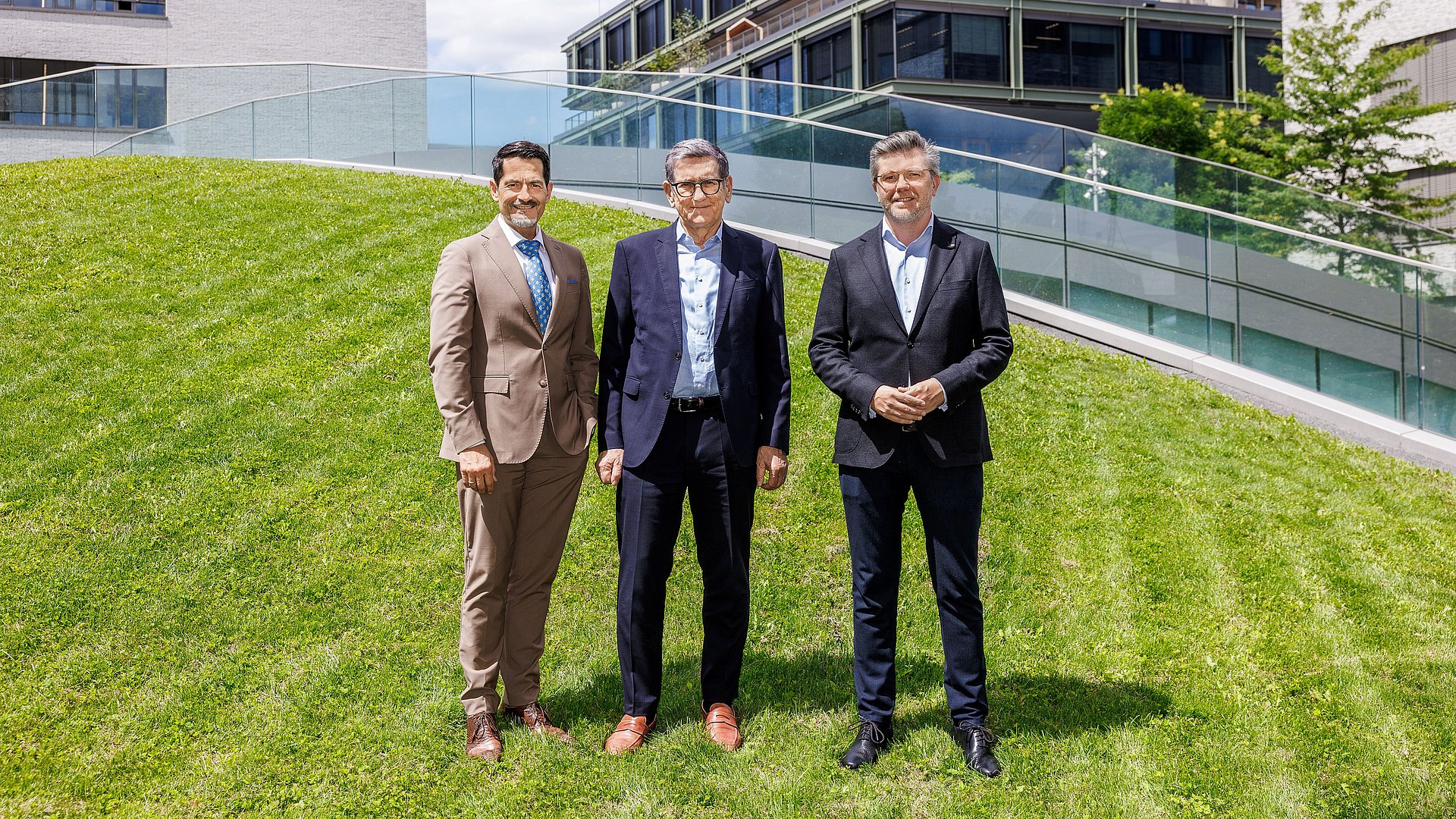
Prof. Reinhold R. Geilsdörfer, Chairman and CEO of DSS, said in Heilbronn: “We are specifically fostering key competencies for the science, business, and society of tomorrow. With the new focus on chip design at the Bildungscampus in Heilbronn, we are closing a crucial gap in our innovation ecosystem: In this way, we are establishing a comprehensive offering that spans from the education and qualification of outstanding talent to cutting-edge research on highly efficient AI chips and their direct commercial application on-site.”
TUM President Prof. Thomas F. Hofmann said: “Microelectronics and chip design are among the key competencies for the digital and AI-based systems of the future. With the new specialization at the TUM Campus Heilbronn, we are educating international talent in a strategically important field of technology while simultaneously strengthening Germany’s and Europe’s technological capabilities.”
In doing so, we bring together TUM’s academic excellence and expertise across our campuses in Heilbronn, Munich, and Garching.
Prof. Ali Sunyaev, Vice President of TUM Campus Heilbronn, said: “By specializing in chip design, we are specifically expanding the profile of TUM Campus Heilbronn beyond its core areas of management and computer science to include a highly relevant future-oriented technology field. In doing so, we bring together TUM’s academic excellence and expertise across our campuses in Heilbronn, Munich, and Garching, and we strengthen our teaching by offering our students a well-founded, practice-oriented specialization. At the same time, we are providing new momentum for collaboration with our academic partners as well as with companies in the regional innovation and industrial ecosystem and beyond.”
Integration into an existing master's program
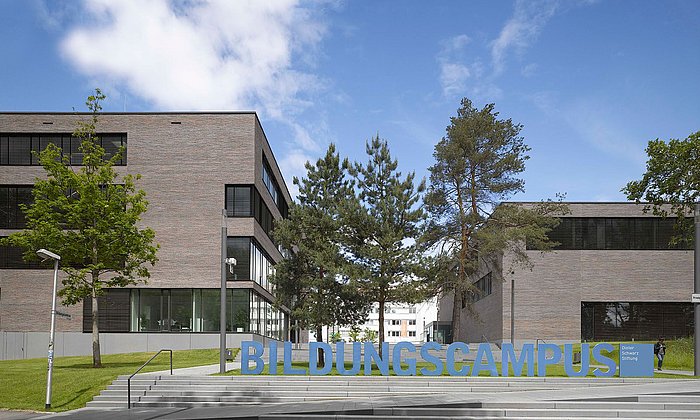
Key academic and practical components of the specialization within the existing master’s program in Information Engineering are offered at the TUM Campus Heilbronn. In addition, the expertise of the TUM campuses in Heilbronn, Munich, and Garching is pooled. Additional teaching and research staff positions, as well as technical equipment, lay the groundwork for expanding the program.
Artificial Intelligence
Artificial intelligence is shaping our working lives, research, and the world around us. Learn how we are contributing to this progress by developing innovative AI methods and applications, ranging from robotics to machine learning.

-
This specialization builds on TUM’s research expertise in the Department of Computer Engineering at the TUM School of Computation, Information, and Technology. For more than ten years, the relevant professorships have been collaborating within the “Design of Electronic Circuits and Systems” (DECS) Center of Excellence. The research ranges from components to circuit design and design methods to system design and includes, among other things, secure chip systems, AI processors, and novel components.
Technical University of Munich
Corporate Communications Center
- Julia Rinner
- julia.rinner@tum.de
- presse@tum.de
- Teamwebsite