Award-winning science communication project
Can cooking help prevent colorectal cancer?
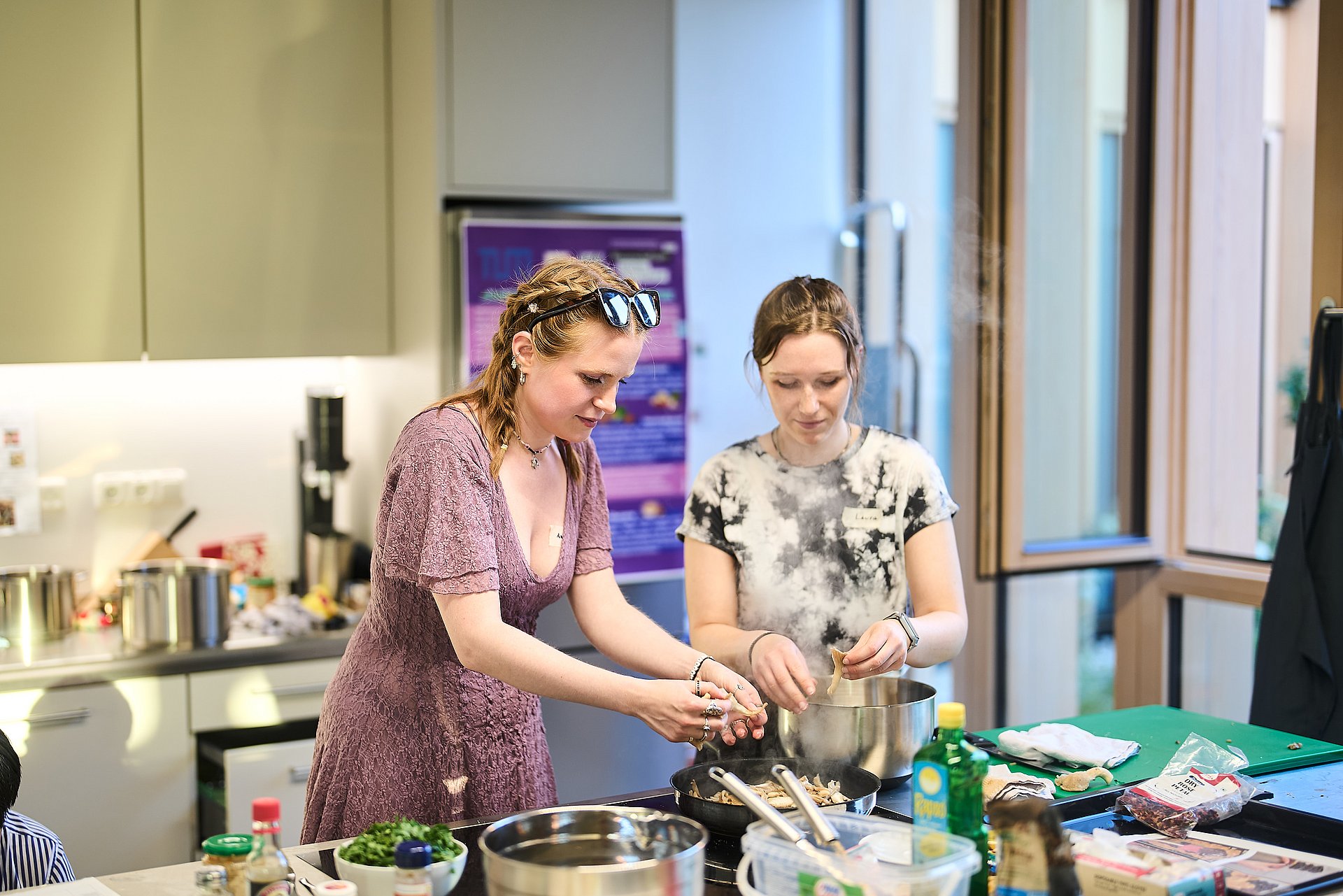
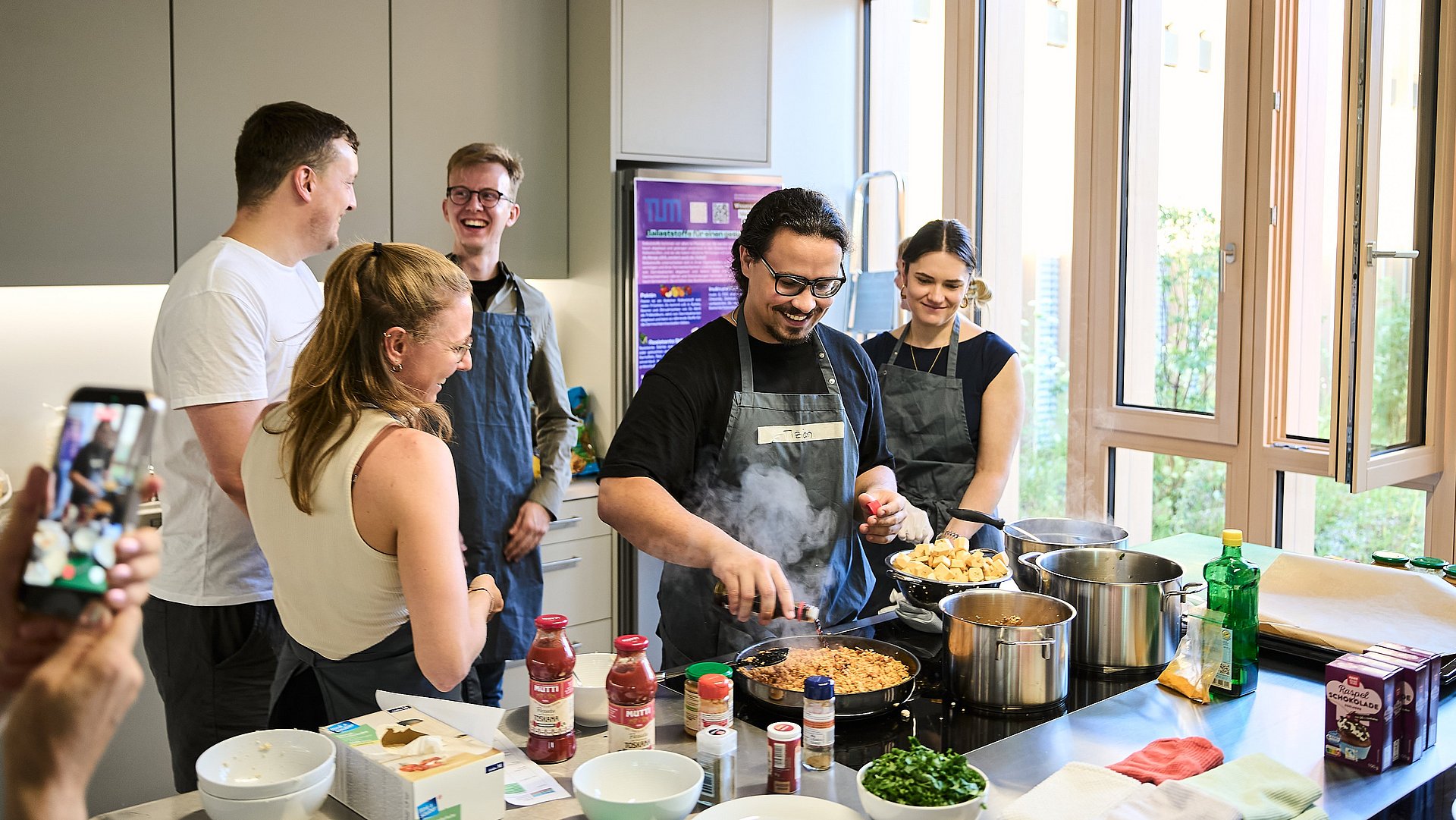
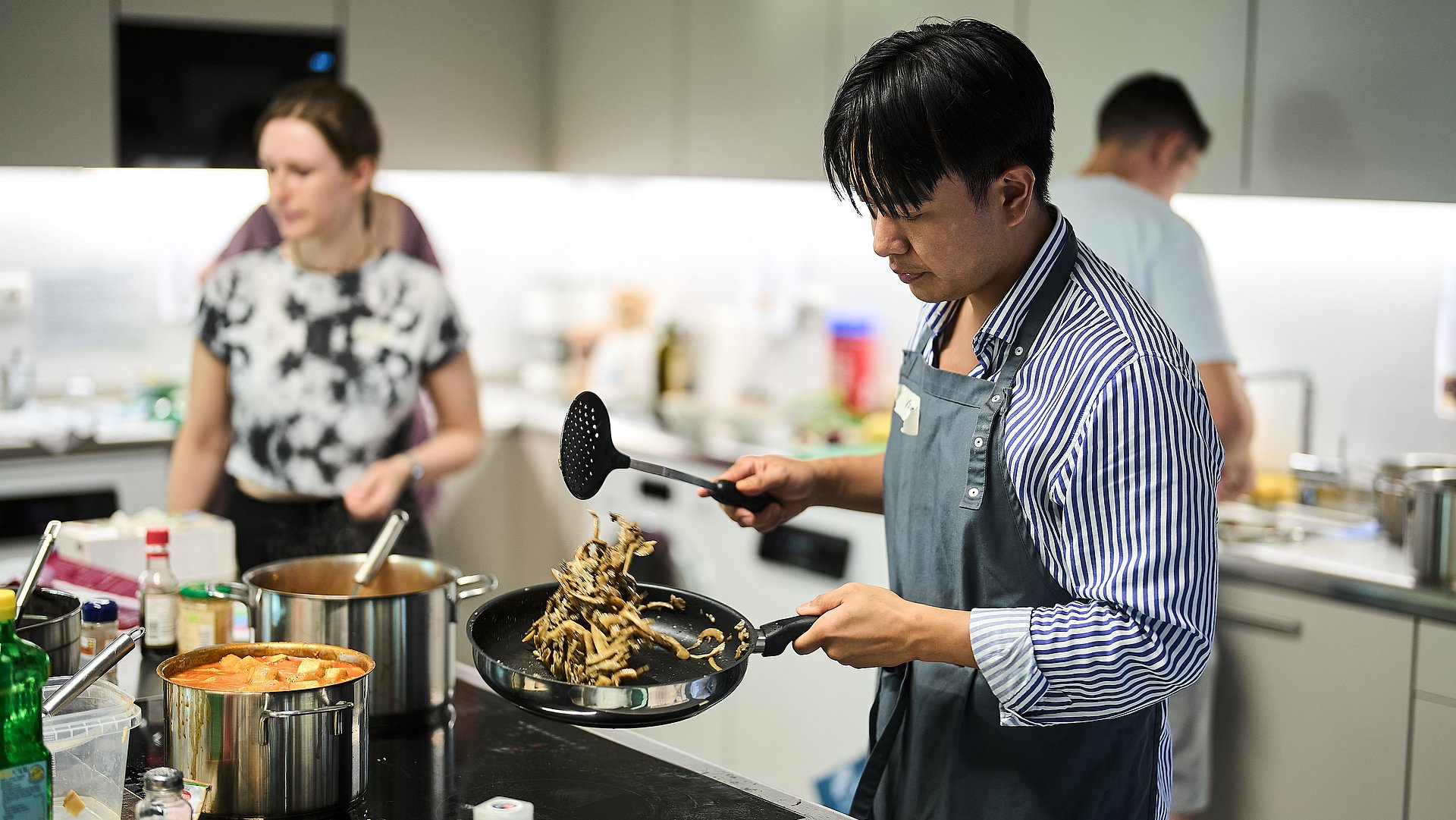
On a stovepot, onion skins, parsley stems and other vegetable scraps that would normally end up in the compost are gently simmering. Next to them, plantains are cooking. A young man chops walnuts while, across the counter, pitted dates are spread out on a baking sheet. Crumbled tofu mixed with peanut butter sizzles in a frying pan. Between cutting boards and pots, laughter fills the room.
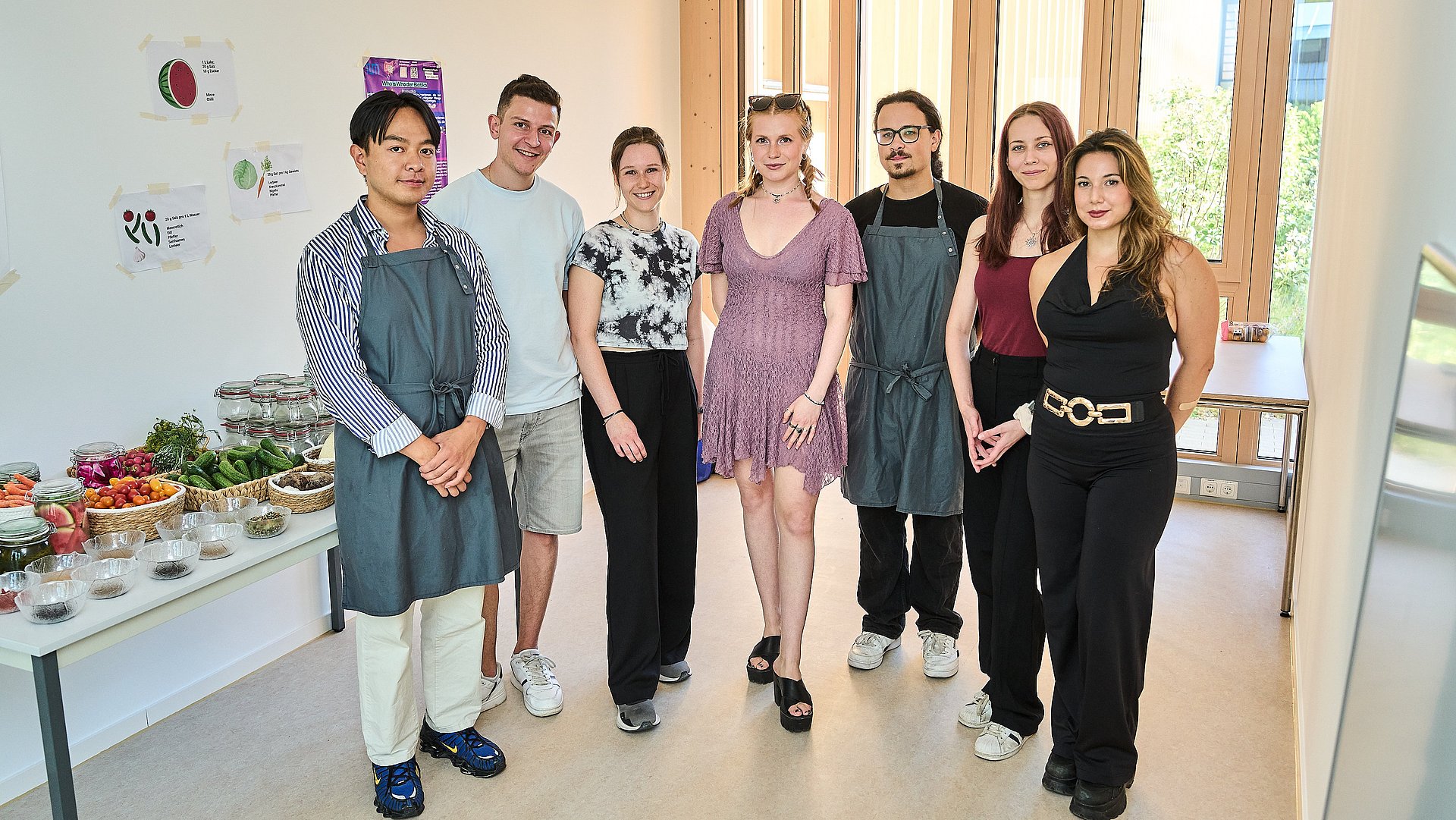
Around 20 participants have gathered on this Saturday in the teaching kitchen at the Institute of Clinical Nutrition Medicine on TUM’s Olympiapark campus. Together with the student team behind Science Snack, they prepare plant-based dishes ranging from dips to dessert.
Every ingredient has been chosen with care. The recipes are all built around a question many people rarely consider in everyday life: What role does nutrition play in gut health? “Food brings people together, and when you’re chopping, cooking and tasting side by side, it becomes much easier to talk about topics like gut health and colorectal cancer prevention,” says chef Viet Ha Dietrich Nguyen. “It doesn’t feel like a lecture – it feels like a normal conversation.”
Why colorectal cancer also affects young people
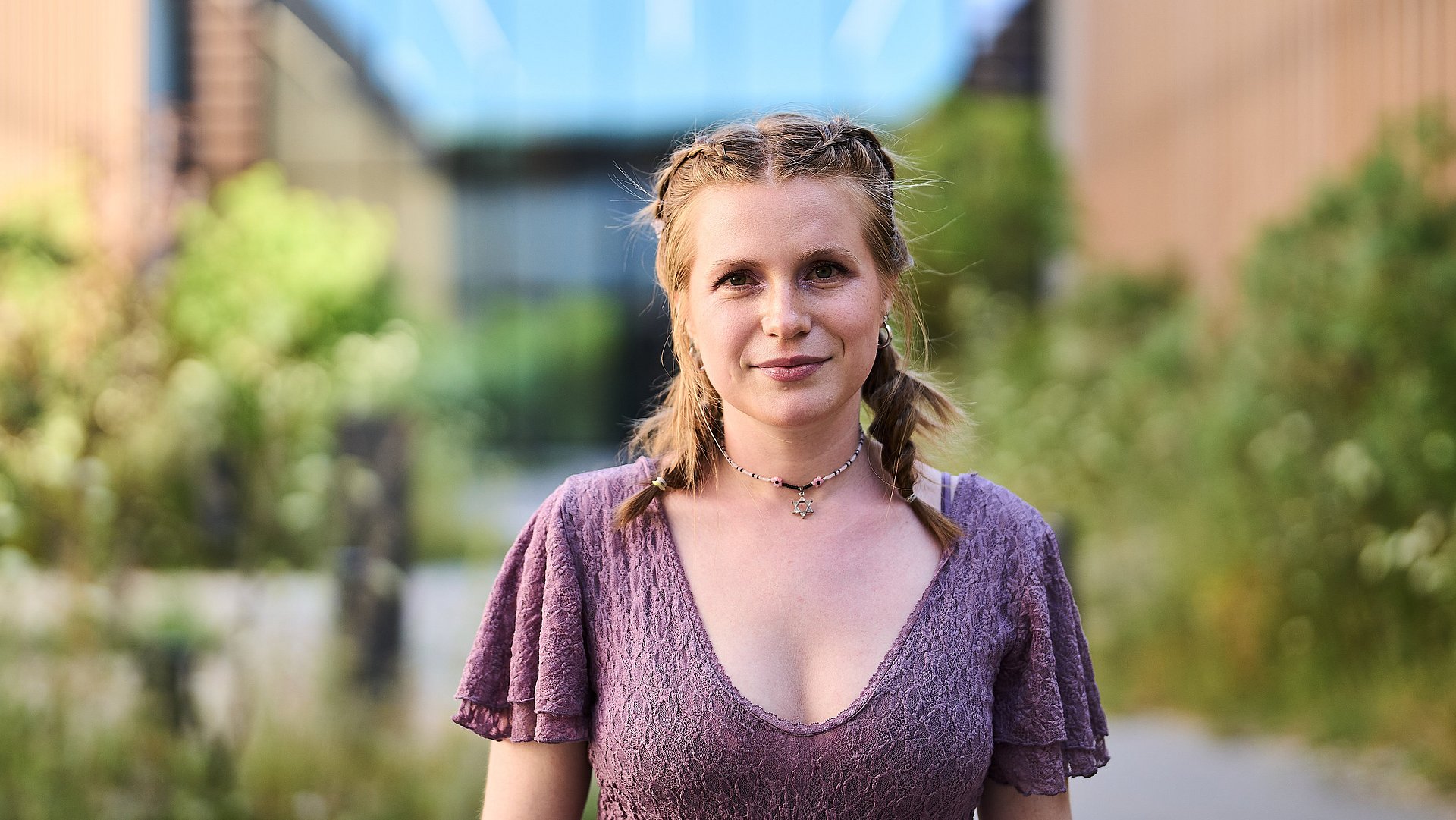
Just before dinner, the teaching kitchen falls quiet once again. Anna Fuhrmann, a master’s student in Molecular Biotechnology and the founder of Science Snack, talks about colorectal cancer prevention in young people.
Risk factors include a family history of the disease, lack of exercise, alcohol and tobacco use, as well as red and processed meat. The most important warning sign, she says, is blood in the stool. “It doesn’t necessarily mean cancer, but you should still have it checked out,” advises Fuhrmann. Changes in bowel habits lasting several weeks or unusual abdominal pain should also be evaluated by a doctor.
Although colorectal cancer still primarily affects people over the age of 50, researchers have observed a rise in cases among 20- to 39-year-olds for years. “We now know that diet is one of the most important modifiable lifestyle factors influencing colorectal cancer risk,” explains Olivia Coleman from the Chair of Nutrition and Immunology at the TUM School of Life Sciences.
According to Coleman, a Western-style diet high in ultra-processed foods, fat and sugar and low in dietary fiber is considered particularly harmful. In contrast, a fiber-rich diet with plenty of fruits and vegetables helps support a healthy gut microbiome.
Colorectal cancer prevention in everyday life
Science Snack shows how these findings can be put into practice. Out of more than 220 submissions, the project was one of ten selected for an award in the 2026 Hochschulwettbewerb (Higher Education Competition) organized by Wissenschaft im Dialog (Science in Dialogue). “Seeing that we can provide people not only with a good meal but also with knowledge is what makes this project special to me,” emphasizes Dietrich Nguyen.
With a mobile kitchen, the Science Snack team also sets up at festivals like Zamanand, bringing science to places where people come together to talk. “At a street festival, we handed out washed organic kiwis with their skins on, since most of the fiber is found in or under the skin,” explains Maren Neumann, who supports Science Snack as part of the project leadership team. “It was fascinating to watch people go from ‘Absolutely not!’ to ‘It tastes completely normal,’ and leave with a practical tip they could immediately use to add more fiber to their everyday diet.”
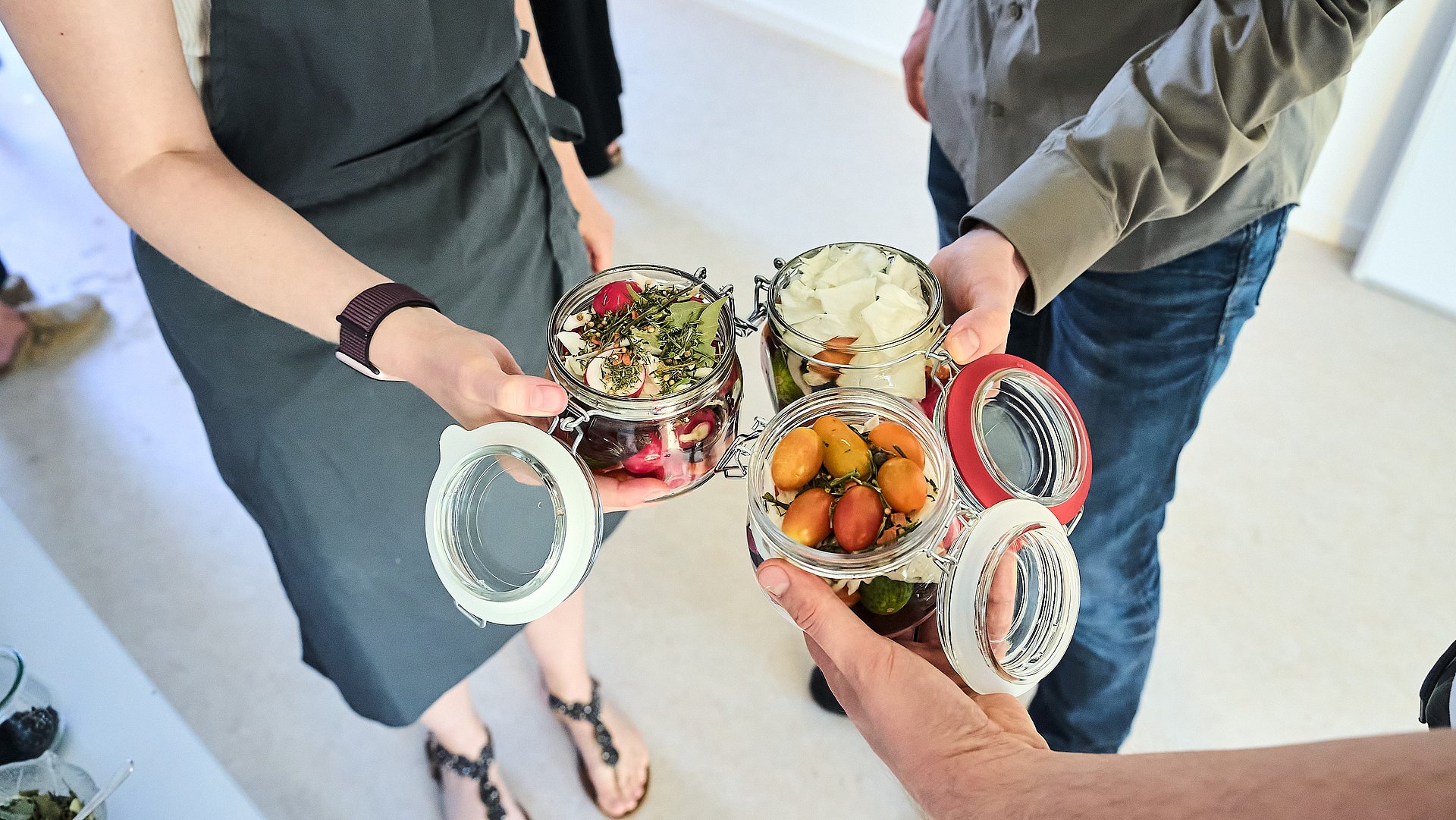
The Science Snack cooking evenings feature a variety of cooking and tasting stations. At the fermentation station, Fuhrmann explains the health benefits of lacto-fermentation and hands out samples of fermented watermelon before participants pickle vegetables in a salt brine themselves. “When I was little, I used to preserve fruits and vegetables from my grandmother’s garden in Ukraine,” she says. “Now I ferment together with my mom. So far, I’ve hardly met anyone outside the Ukrainian community who has ever tried pickled watermelon!”
During a group myth-busting session, participants learn which nutrition tips are backed by scientific evidence and which are not – for example, whether eating meat affects the risk of colorectal cancer. Team member Lisa Stein explains that nitrite curing salt, especially in processed meat products, is particularly problematic: “Next time you go grocery shopping, take a look at the ingredient list. You’ll find it in a lot of products. Simply avoiding that is already a step you can take for your own health.”
For 25-year-old Frederik Keil, a doctoral researcher at Forschungszentrum Jülich, one thing stands out above all: “It’s actually quite simple – much simpler than I expected.” This is exactly what Fuhrmann sets out to achieve with Science Snack: “I hope our cooking events inspire participants to try things out at home. I want them to enjoy cooking and fermenting, to be curious about new and unfamiliar foods, and, of course, to learn to question nutrition myths they come across on social media.”
Public Engagement
Hands-on science and participation: We promote open discourse between research and the public through public engagement. Experience inspiring lectures, projects, and events.
- Go to the Science Snack Website
- View the recipes
- 2026 Hochschulwettbewerb (Higher Education Competition), organized by Wissenschaft im Dialog (Science in Dialogue) and funded by the German Federal Ministry of Research, Technology and Space as part of the 2026 Science Year, Medicine of the Future
- MI-EOCRC: Microbiota-Based Prevention of Colorectal Cancer in Young People
- Chair of Nutrition and Immunology
- ZIEL – Institute for Food & Health
Technical University of Munich
- Natalie Neudert
- natalie.neudert@tum.de