Interview: German national soccer team physician Jochen Hahne and FC Bayern physician Peter Ueblacker
“When you're on the field, you shut everything else out”
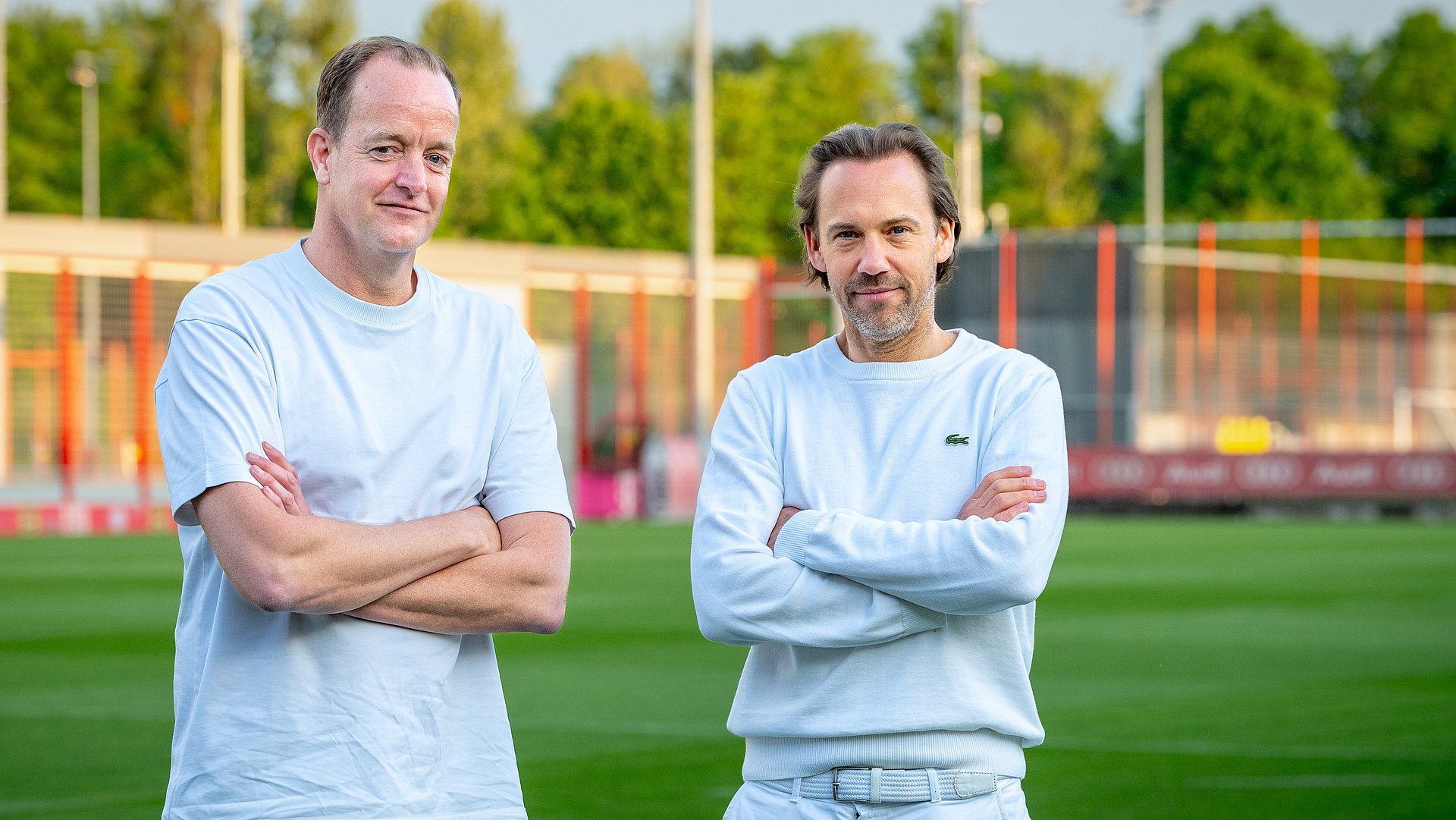
You are both on the sidelines at major soccer matches, and sometimes on the field as well. What does it feel like just before kickoff?
Peter Ueblacker: At regular Bundesliga matches, a lot of things are routine. But when there’s a lot at stake in a game, I do sit down on the bench with a different feeling. You can sense the energy in the team. When the stadium is really loud, it’s a great feeling.
Jochen Hahne: When you have to step in, you shut out all of this. Then it doesn’t matter what’s happening around you. You focus on that one task.
How fit do you have to be to run halfway across the field and then examine a player?
Ueblacker: So far, no one has tested us doctors for fitness. But my goal is always to get to the player before our physical therapists do (laughs).
Once you’ve reached the player, you have to make quick decisions. How does that work?
Hahne: The initial interaction with the player is crucial. It often gives us 80 percent of the information we need within the first one or two sentences to decide whether he has to stop playing or not.
Ueblacker: You’re not making a full diagnosis out there. But there are examinations of joints, muscles and so on that can be done in that short amount of time. There are also criteria for whether a player can continue or not – for example, pinpointing where pressure causes pain and comparing this with other injuries where we know that continuing to play is not possible. And, of course, we exchange information with colleagues and physiotherapists. In the end, though, experience is what helps most. When I started out, I was sometimes a bit daunted by having to make a quick decision. But it’s unavoidable, and over the years, you learn.
Some injuries look worse on the screen than they turn out to be.
For those of us who only see the injury on TV, but in slow motion and close-up: Are there injuries that look worse than they are?
Hahne: There are always injuries that look worse on screen than they turn out to be, especially when high speeds are involved.
Ueblacker: The images can even mislead experts like us. There was a case where a cruciate ligament injury was suspected in a player. But when we examined him on the field, we concluded that it was not the cruciate ligament and let him continue playing. When I saw the video replay on the bench shortly after returning from the field, it made me pause for a second. Fortunately, our initial assessment turned out to be correct.
And vice versa? Are there serious injuries that do not look like much?
Ueblacker: Yes, that happens frequently, especially with muscle injuries. A player sprints, then stops abruptly and grabs the back of his leg – as a spectator, you sometimes don’t even notice it at first, or it simply looks unspectacular. In reality, though, it can be a significant muscle injury, and the player may be out for several weeks.
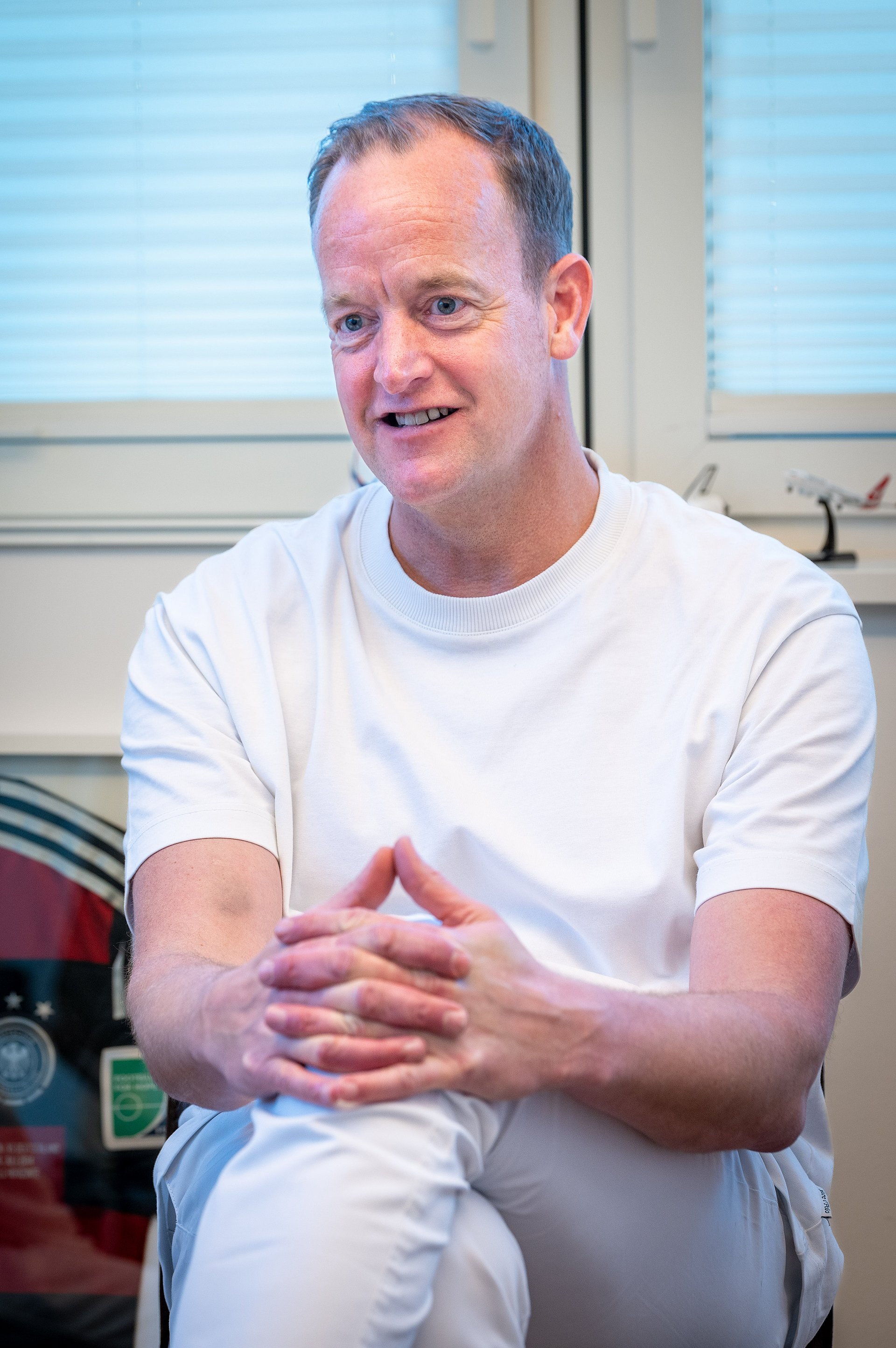
You both started out in sports medicine at TUM …
Ueblacker: I completed my preclinical training at LMU and then moved to TUM for the clinical semesters. Sports orthopaedics has long been one of TUM’s flagship areas. At the same time, the groups were very small back then. I felt very comfortable and well supported there.
Hahne: I moved here from Münster after my preclinical training. I met Peter at Klinikum Rechts der Isar. At the time, he was working in Professor Andreas Imhoff’s Sports Orthopedics Clinic as an Arzt im Praktikum, a practical training position for physicians that no longer exists today.
One reason you moved to Munich, Dr. Hahne, was the opportunity to play basketball at FC Bayern. Even so, was it already clear to you that you wanted to be a doctor on the sidelines one day?
Hahne: Yes, that was always what I wanted to do. After school, I did an internship with Borussia Dortmund’s then-team physician. When I stopped playing basketball, the coach at the time asked me whether I wanted to set up the medical department there. That was eventually how I came into contact with the soccer players.
Ueblacker: For me, that was not clear at all. I saw myself more as an orthopedic surgeon, working in arthroscopy and joint surgery. To be honest, I more or less fell into working as a team physician.
How did that happen?
Ueblacker: In the 1990s, I spent time on several occasions observing in Hans-Wilhelm Müller-Wohlfahrt’s practice [the long-time team physician for the national team and Bayern Munich]. About ten years later, I had the opportunity to join his new group practice as a founding partner. When Dr. Müller-Wohlfahrt became team physician at Bayern again after a break, I had the chance to get involved there too. That’s not something you can really plan, but from the very beginning, I really enjoyed it and saw it as a challenge. And that has remained true to this day.
Sports medicine has become much more scientific in recent years.
Is there anything you would advise medical students who want to serve as team physicians later on?
Ueblacker: Sports medicine has become much more scientific and much more professionalized in recent years. For example, when we started out, there were almost no studies on muscle injuries. And yet these are the most common injuries in soccer. Today, there are studies and data collections, such as the UEFA study, in which injuries among professional soccer players are systematically recorded. But you don’t learn much about that at university. My tip would be: Engage with studies like these, go to relevant conferences, build contacts and gradually build your own experience.
Hahne: Personally, I would advise young doctors to perhaps start by looking after youth teams. That way, you can grow along with the team. With the professionals, the pressure is enormous.
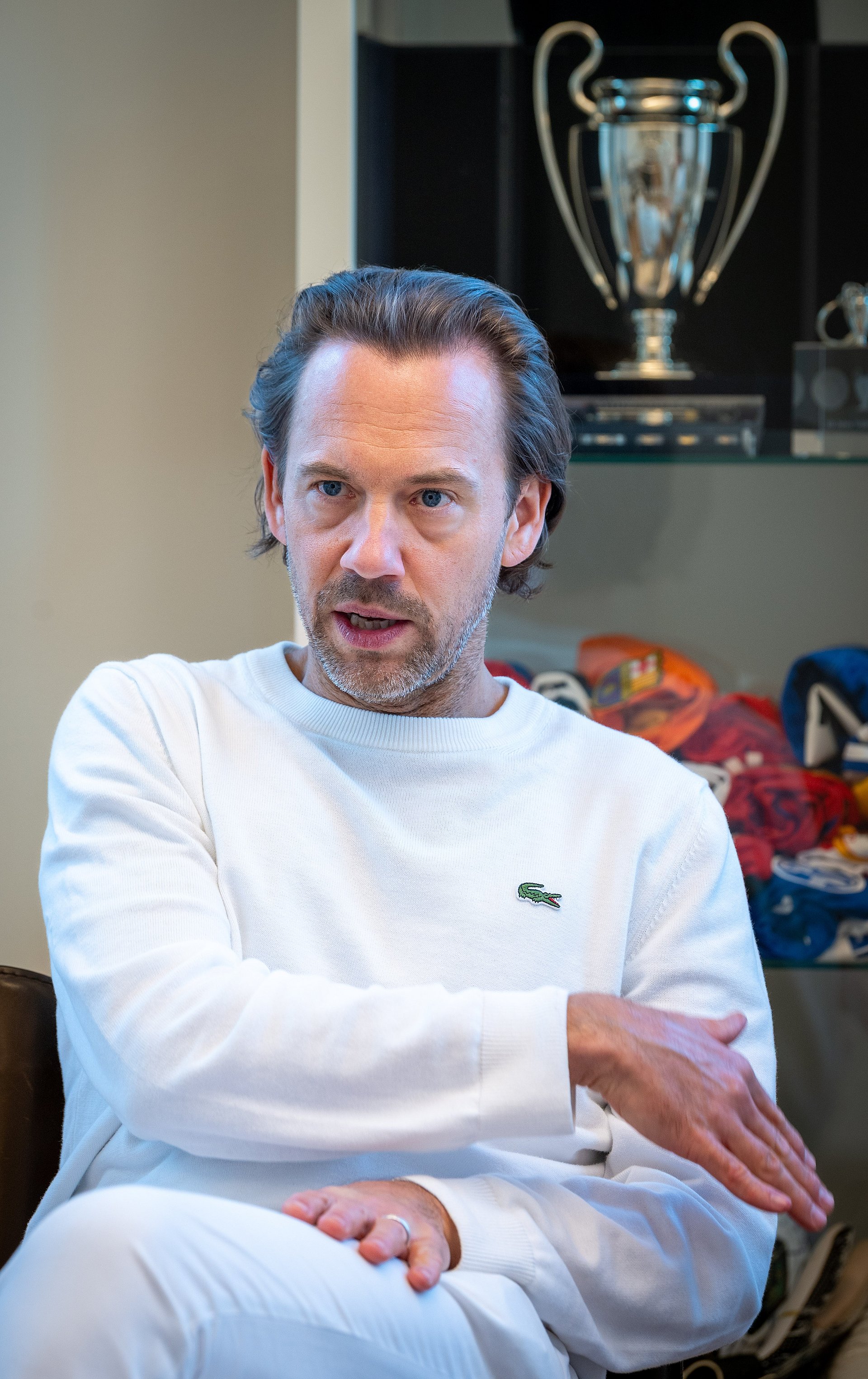
Is sports medicine also changing because of new technologies?
Ueblacker: Definitely. MRI and ultrasound, for example, have become much more detailed in recent years. That helps us detect injuries that would not have been clearly visible in the past. GPS technology also plays a major role, especially in soccer. Aside from helping with match analysis and training management, GPS data tells us as physicians, for example, how a player moved before an injury, how many sprints he made and so on. These data have been collected for more than 15 years. In the early days, though, I had the impression that a great deal was being collected, only to go unused. Today, this information is used systematically, for example for individualized training.
What role does AI play in this?
Ueblacker: The situation we have today with AI can perhaps be compared a little with the situation around data collection in the late 2000s. There are many commercial products that use AI to analyze data. Time will tell what catches on and how it can be used meaningfully in sports medicine.
Let’s go back to the here and now: Dr. Hahne, you will soon be heading to the United States. How much time have you planned for the World Cup?
Hahne: I’m booked from May 26 through July 19, the day of the final. Perhaps Germany isn’t considered one of the top favorites. But many people said the same thing in 2014, and in the end Germany won the World Cup.
Ueblacker: Back then, hardly anyone expected Germany to win. Manuel Neuer was injured, Basti Schweinsteiger was injured and Philipp Lahm was injured too. In the end, things turned out differently. Hanging behind me here is the jersey Philipp Lahm wore in the 7-1 win against Brazil, which he was kind enough to bring back for me from Brazil.
Hahne: Tournaments depend very much on momentum, on the mood among the players and throughout the team as a whole. When the players play well, the whole group starts to come together and incredible confidence builds.
Each member of the team contributes their own experience.
Do you keep an eye on the medical teams of the other squads? Is there anything you can learn from them?
Hahne: As sports physicians, we do exchange ideas with one another on specific questions. Ultimately, though, every national team has its own approach, its own standard set of medications, equipment and therapy methods. The exchange within your own team is much more important.
Why is the exchange so important?
Hahne: The colleagues each contribute their own experience. The physical therapists, for example, are in very close contact with the players every day. They might say, “This muscle feels different today. Something may be starting to develop.” Then we decide together to take the player out for a day.
Dr. Ueblacker, will you be traveling to the World Cup as a spectator?
Ueblacker: No, I’ll be watching on TV.
Hahne: But we will certainly talk on the phone during the tournament – if necessary, also about medical issues. I’m glad I can call Peter, whether or not the injured player plays for Bayern Munich.
Is there anything you are hoping for at the World Cup?
Hahne: Of course, that we win the World Cup. And that a real tournament atmosphere develops, and everyone comes home injury-free.
-
Dr. Jochen Hahne studied medicine at the Westfälische-Wilhelms-Universität Münster and at TUM, where he received his doctorate in 2007. This was followed by specialist training in orthopaedics and trauma surgery before he became a partner in the Müller-Wohlfahrt practice. He has been a team doctor at FC Bayern Munich (basketball and soccer) for many years and also looks after the German national soccer team.
-
Prof. Peter Ueblacker studied medicine at LMU and TUM. He completed his doctorate and part of his specialist training at TUM Klinikum Rechts der Isar. Ueblacker habilitated at the University of Hamburg, and in 2018 the university awarded him the academic title of professor. He is a long-standing team doctor at FC Bayern Munich.
Technical University of Munich
Corporate Communications Center
- Paul Hellmich
- paul.hellmich@tum.de
- presse@tum.de
- Teamwebsite